Research
EIS Lab develops explainable intelligent systems through research in explainable AI, smart manufacturing, sustainable energy, process intelligence, and graph learning.
Explainable & Human-Centered AI
Our methodological core focuses on AI systems whose decisions can be inspected and communicated. Current work includes probabilistic rule extraction from tree ensembles and agentic explanation generation, with an emphasis on useful, grounded explanations.
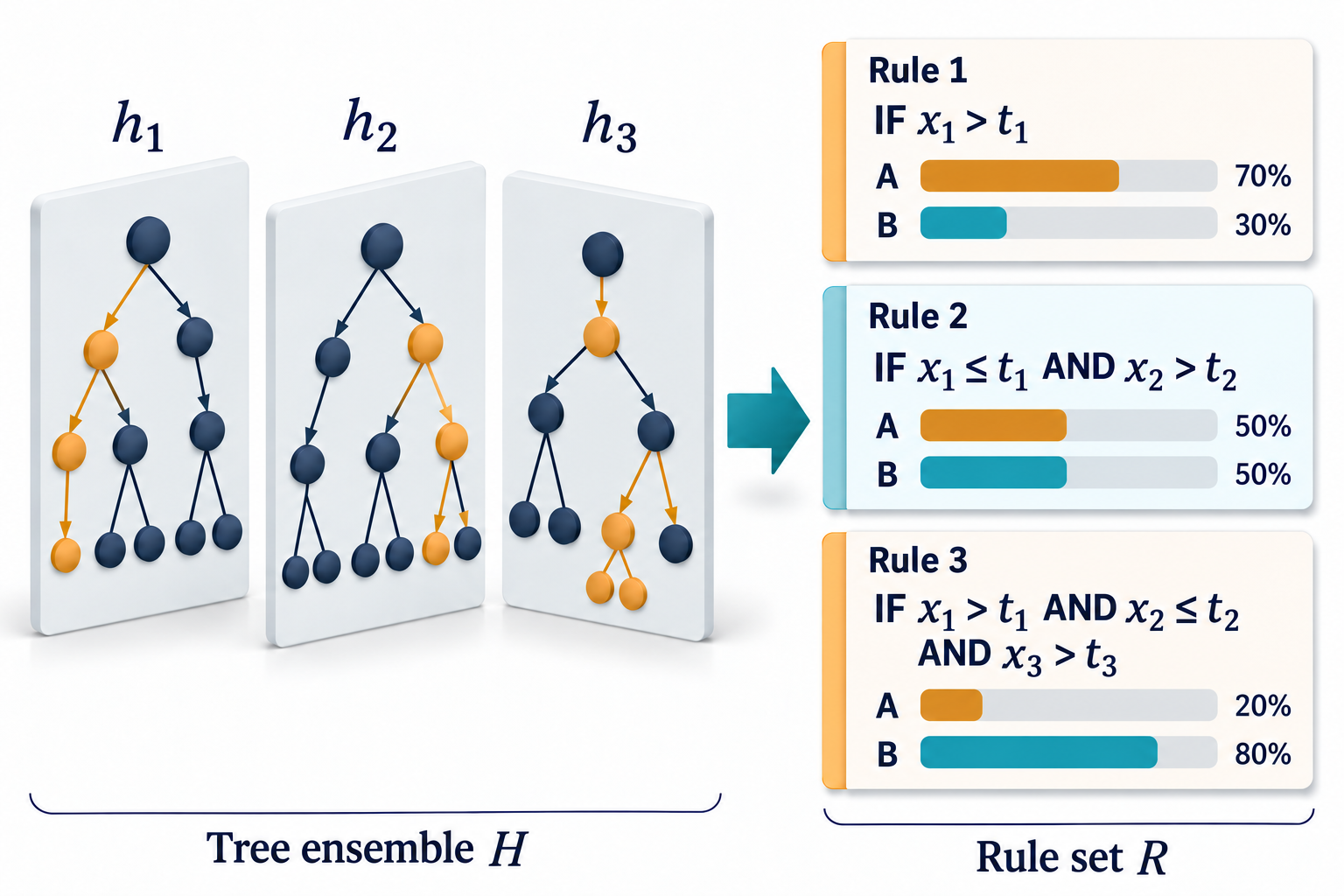
Probabilistic Rule Extraction from Tree Ensembles
This line of research extends rule extraction from tree ensembles toward probabilistic and calibrated symbolic models. The objective is to preserve useful predictive behavior while producing compact rules whose confidence can be interpreted and assessed.
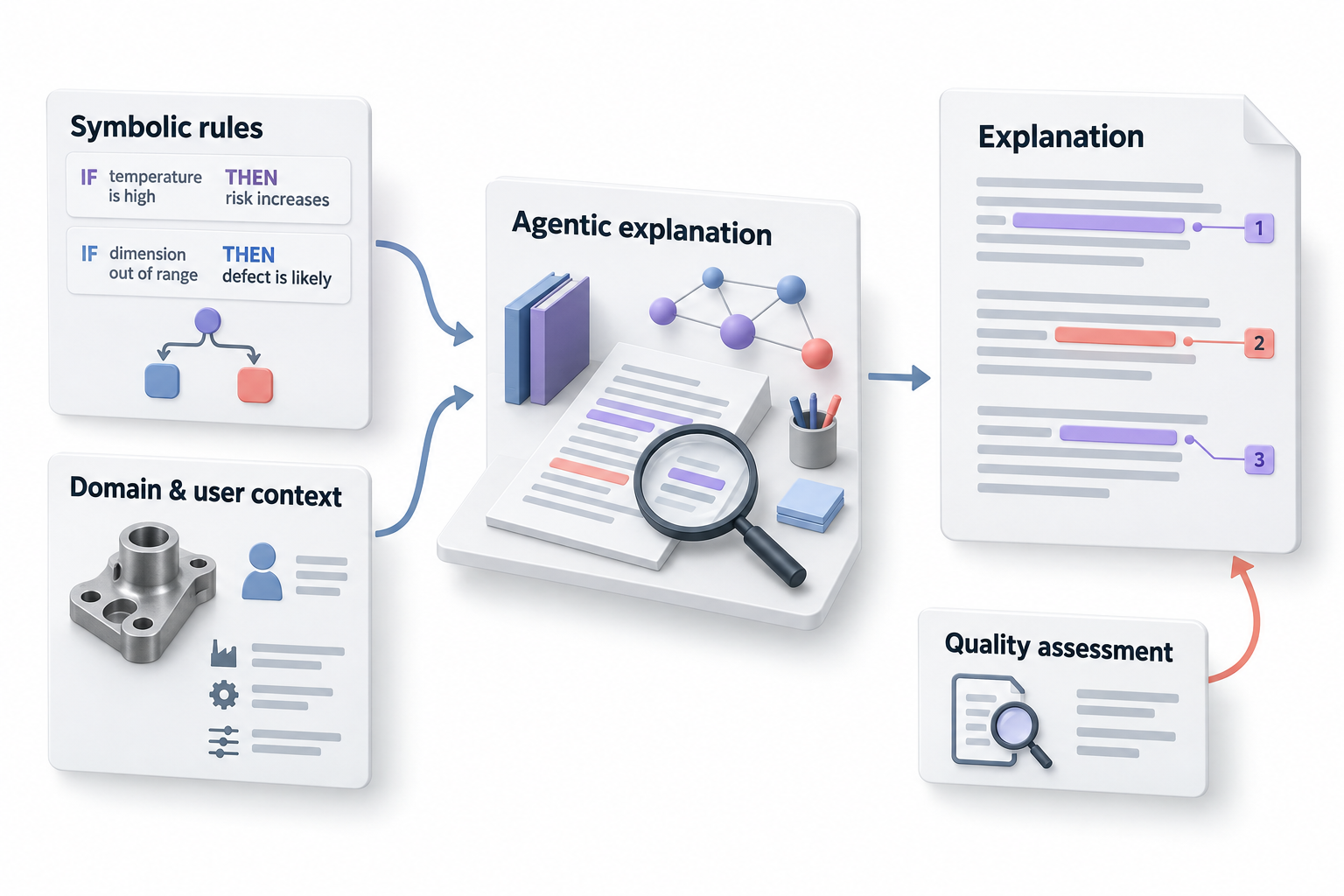
TRACE — Agentic Explanation Generation
TRACE investigates how AI agents can generate and assess natural-language explanations for manufacturing quality predictions. The research combines symbolic rules with relevant domain knowledge and user context to address different explanation needs. The goal is to produce explanations that remain consistent with predictive evidence and are useful to users with different responsibilities and levels of technical expertise.
Intelligent & Explainable Smart Manufacturing
We develop AI methods for manufacturing systems, especially quality prediction and explanation. Current work combines symbolic representations and language models to produce grounded explanations for manufacturing decisions.
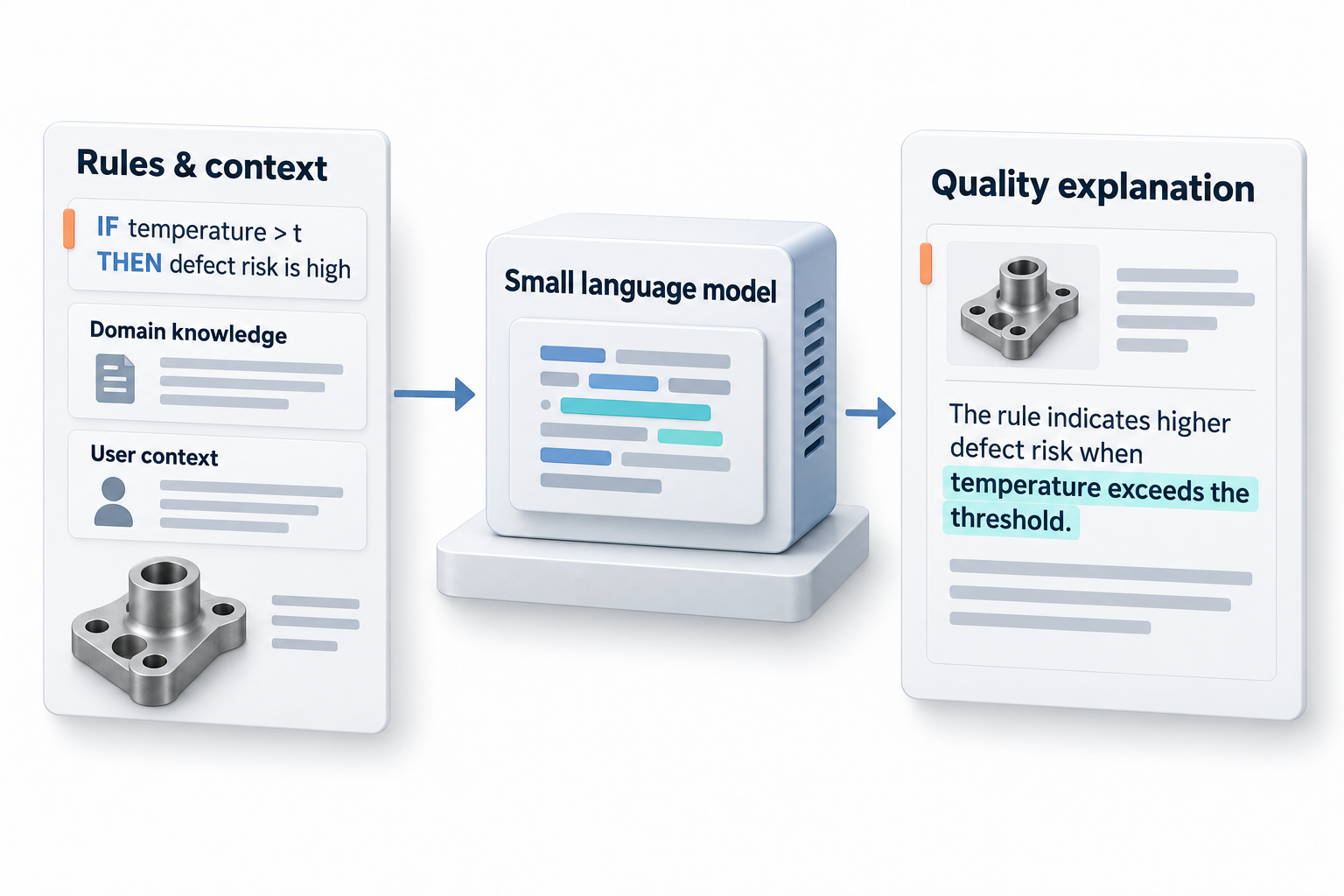
RuleSLM — Grounded Natural-Language Explanations for Manufacturing Quality Prediction
RuleSLM uses small language models to communicate symbolic decision rules as natural-language explanations of manufacturing quality predictions. Our study, published in Processes, examines how contextual knowledge and behavioral guidance influence explanation generation in injection moulding quality prediction. The work connects interpretable rules with accessible explanations and investigates which contextual information to provide when generating them.
Sustainable Energy Intelligence
We apply machine learning to renewable-energy forecasting and energy-storage diagnostics. Current work includes battery state-of-health estimation from EIS, multimodal solar-power forecasting, and wind-power generation forecasting.
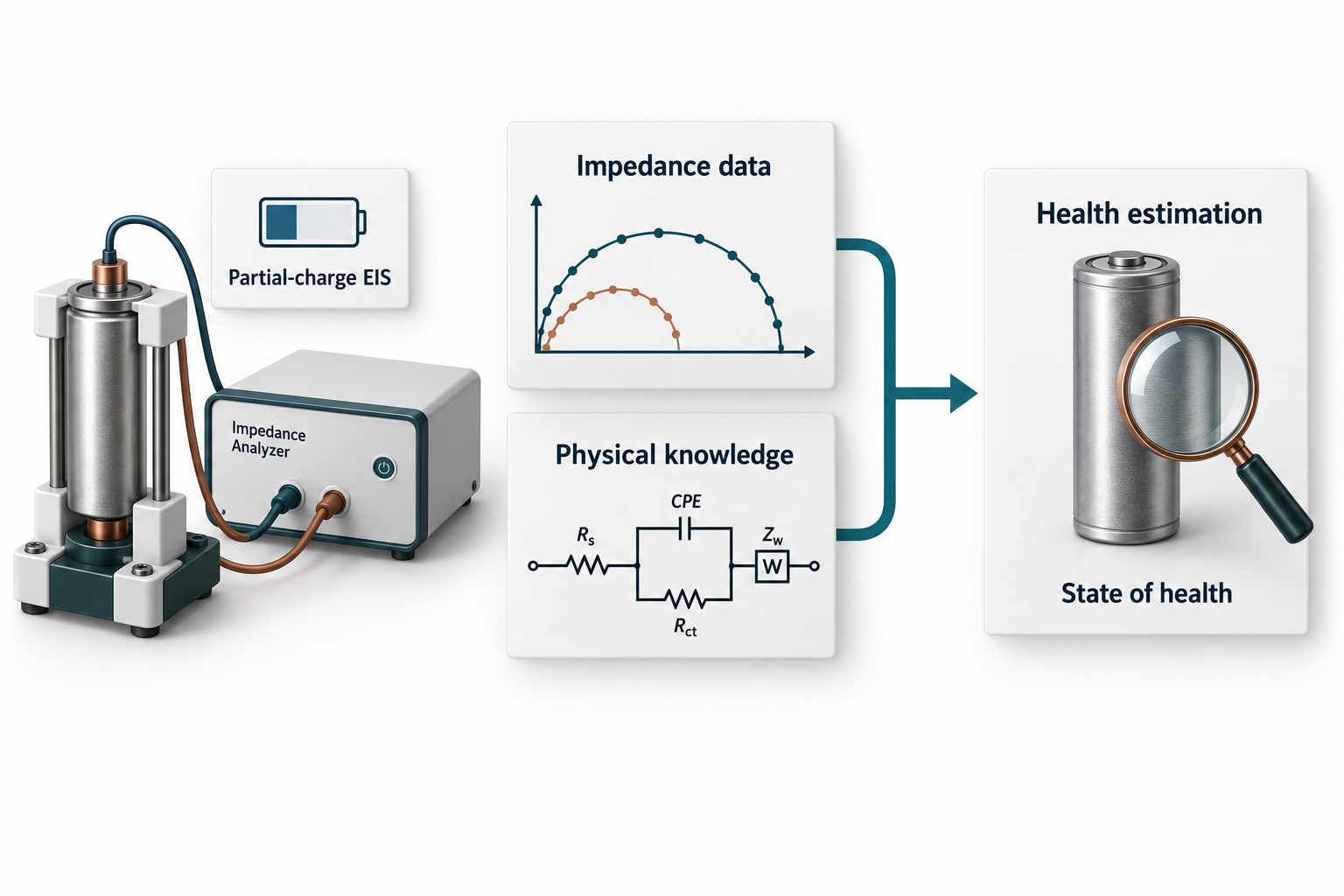
Battery SOH Estimation from Partial-Charge EIS
We investigate battery state-of-health estimation from electrochemical impedance spectroscopy (EIS) measurements collected under partial-charge conditions. The research combines physical knowledge with data-driven learning to support health assessment when full-charge measurements are unavailable. Building on the lab’s earlier EIS-based work, we examine the reliability of estimation across different charging conditions and the value of incorporating physical information into predictive models.
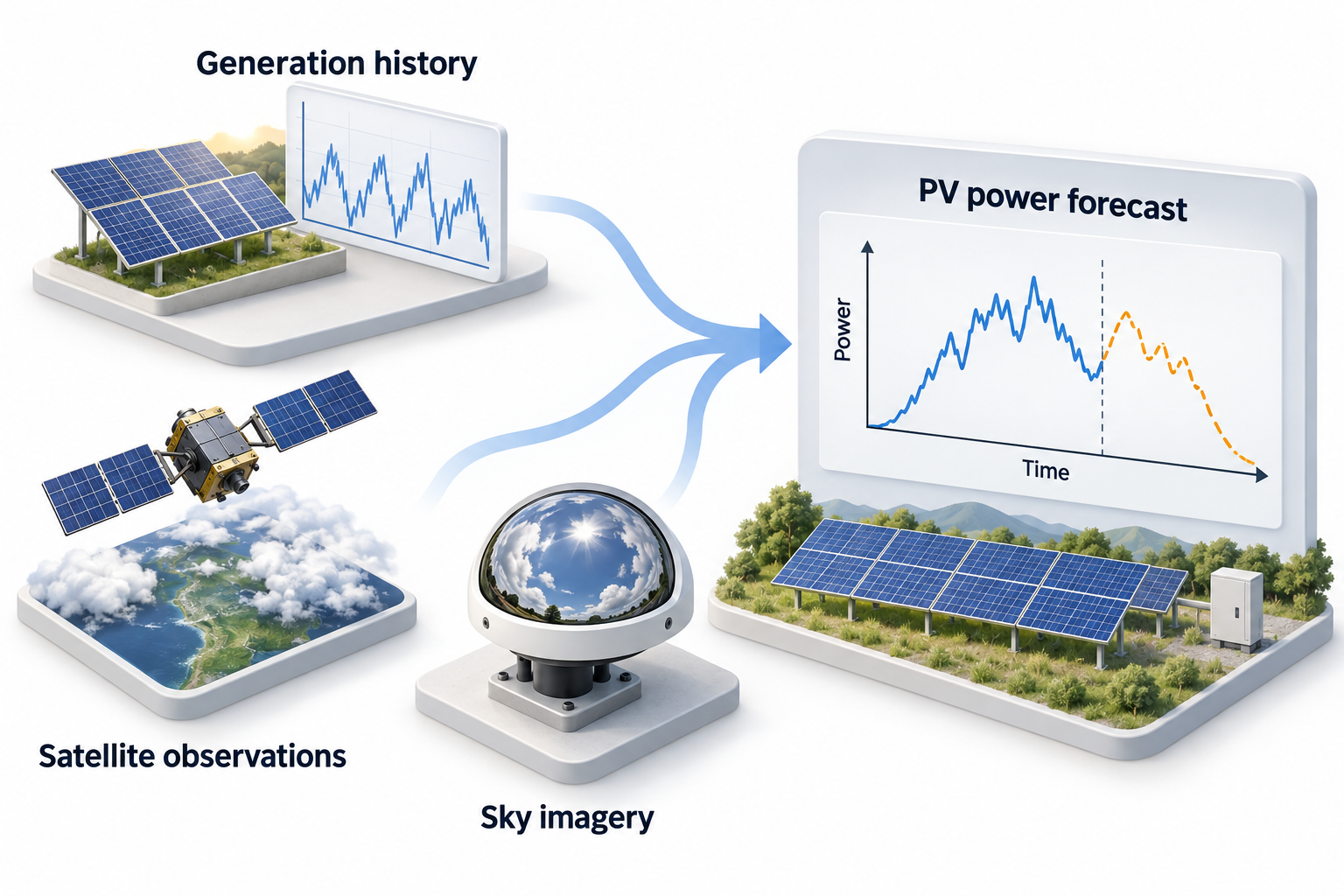
Multimodal Solar Power Forecasting
We investigate photovoltaic power forecasting using historical generation data, satellite observations, and ground-based sky imagery. These complementary sources provide information about power-generation patterns and atmospheric conditions at different spatial scales. The research explores how combining these modalities can help anticipate changes in solar-power output and examines their contribution to forecasting performance under varying cloud and irradiance conditions.
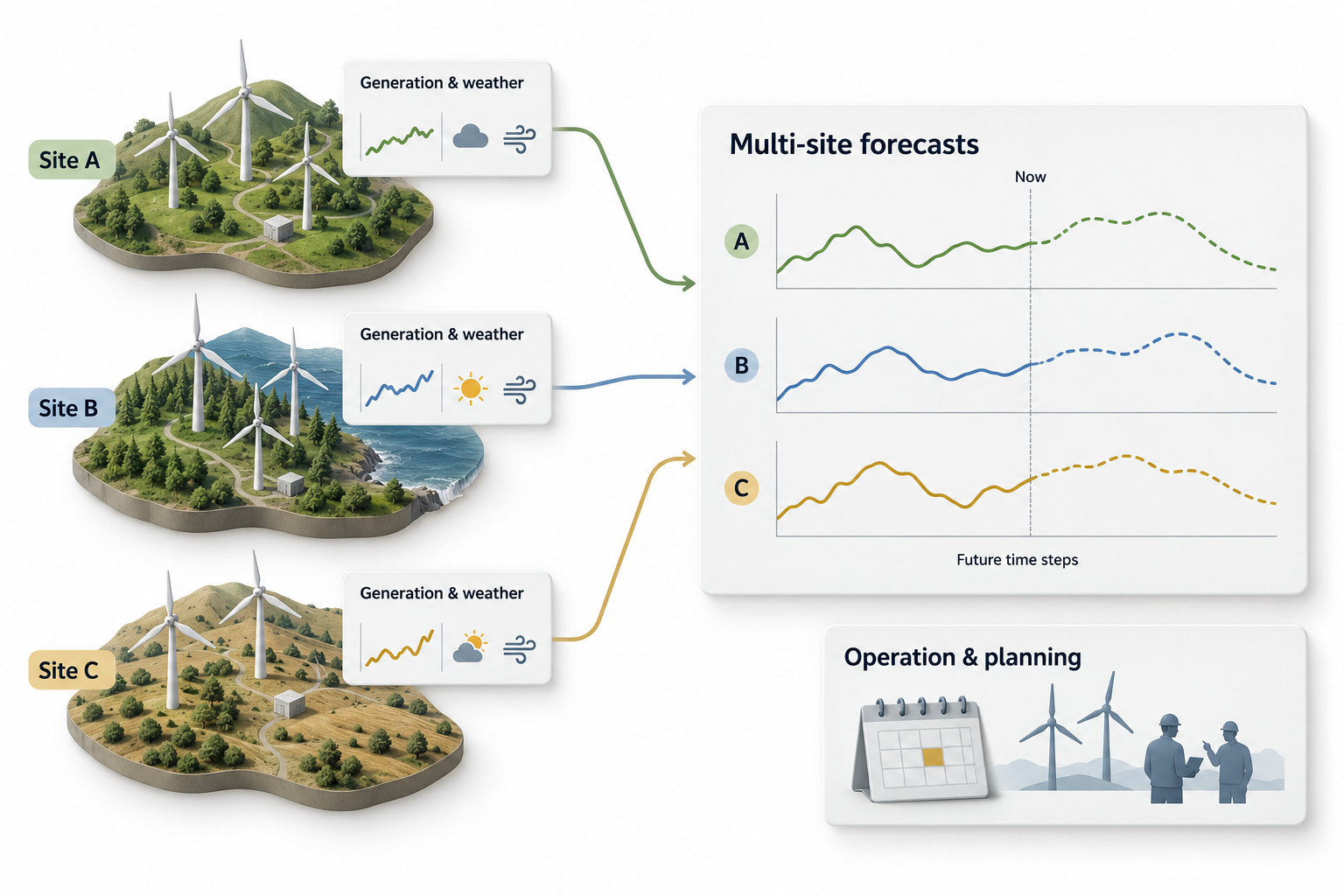
Wind Power Generation Forecasting
This collaborative research investigates wind-power forecasting across multiple sites and future time steps, with applications to wind farms in Guatemala. We examine how historical generation, meteorological information, and modeling choices influence forecast reliability. The aim is to connect predictive performance with practical needs in wind-farm operation and planning, assessing the usefulness of forecasts across different horizons.
Process Mining & Process Intelligence
We investigate how event data from connected industrial systems can reveal process behavior, deviations, and opportunities for better monitoring and decision support.
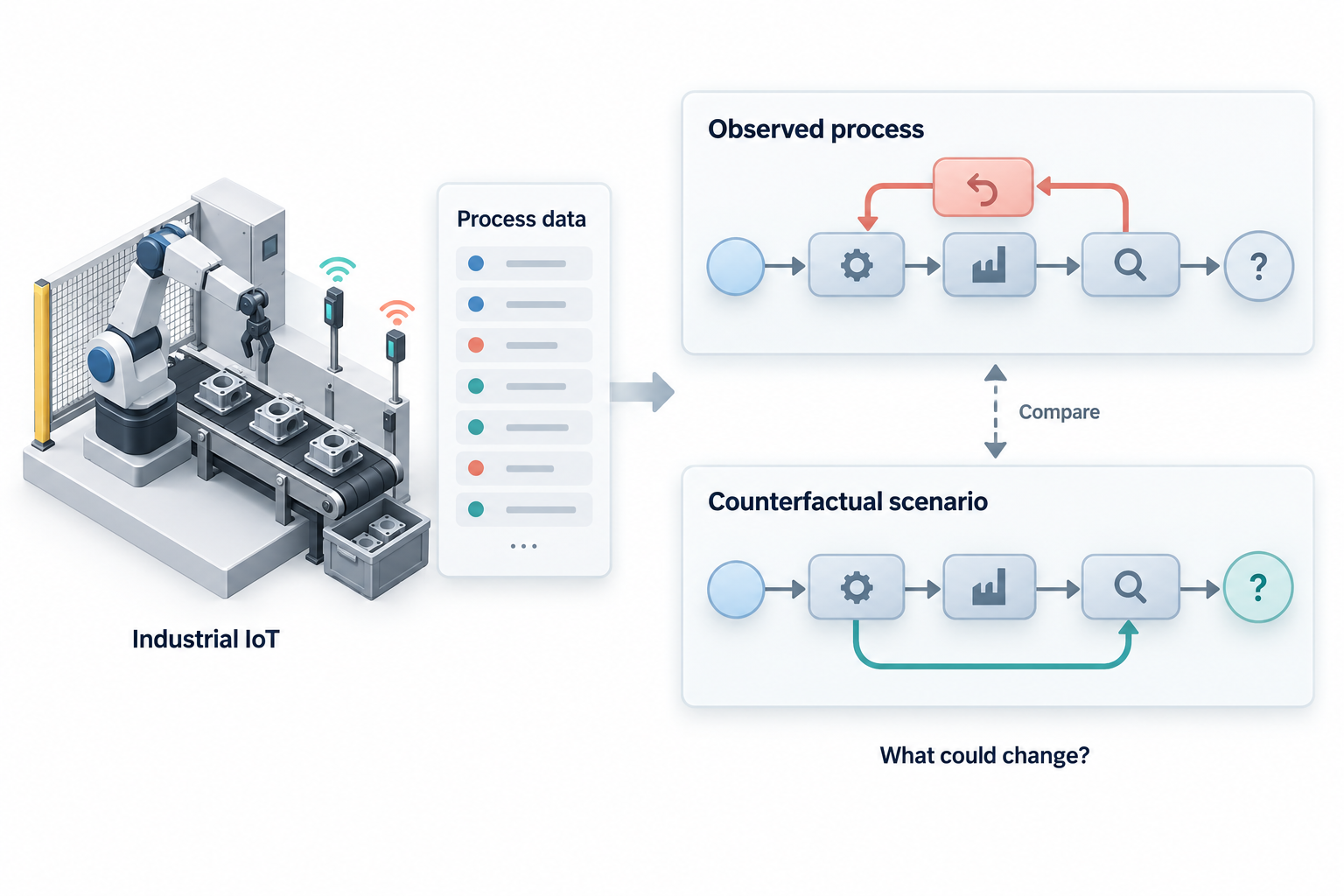
Process Mining for Industrial IoT
This emerging research explores process mining and counterfactual explanations for industrial IoT and smart manufacturing. We investigate how event and sensor information can help users understand process behavior, examine undesirable outcomes, and explore alternative scenarios. The goal is to support root-cause investigation and process improvement through explanations that connect observed outcomes with the processes in which they occur.
Graph Learning & Explainability
We study learning from dynamic temporal graphs and methods that make graph neural models more interpretable. Current work includes DYGLA and an emerging XAI-for-GNN research line.
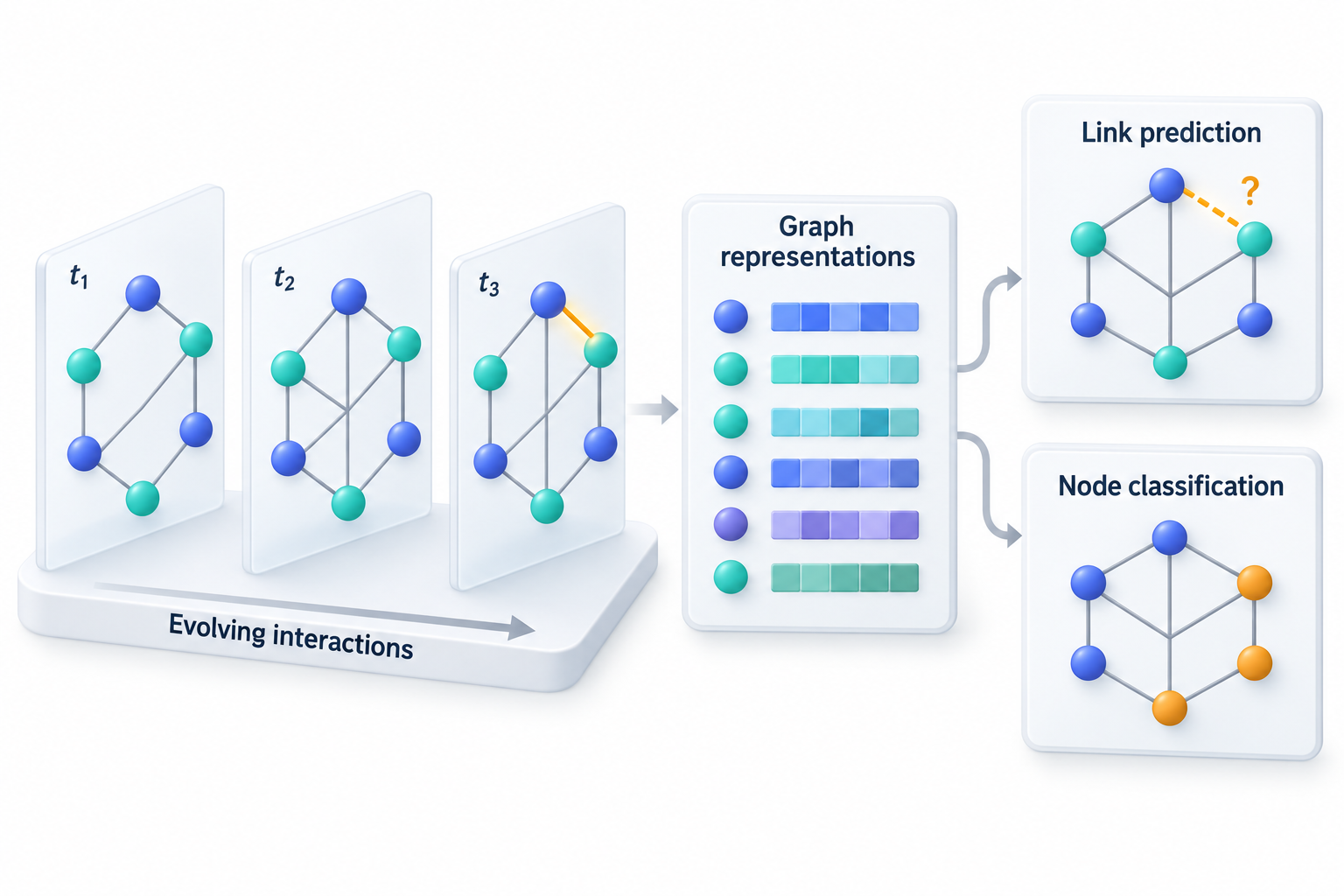
DYGLA — Dynamic Graph Learning Representation
DYGLA investigates representation learning for graphs whose interactions and relational structure evolve over time. The research focuses on capturing connectivity and temporal information to support downstream tasks such as link prediction and node classification. The goal is to learn representations that account for changing relationships and interaction histories, supporting prediction in dynamic graph settings.
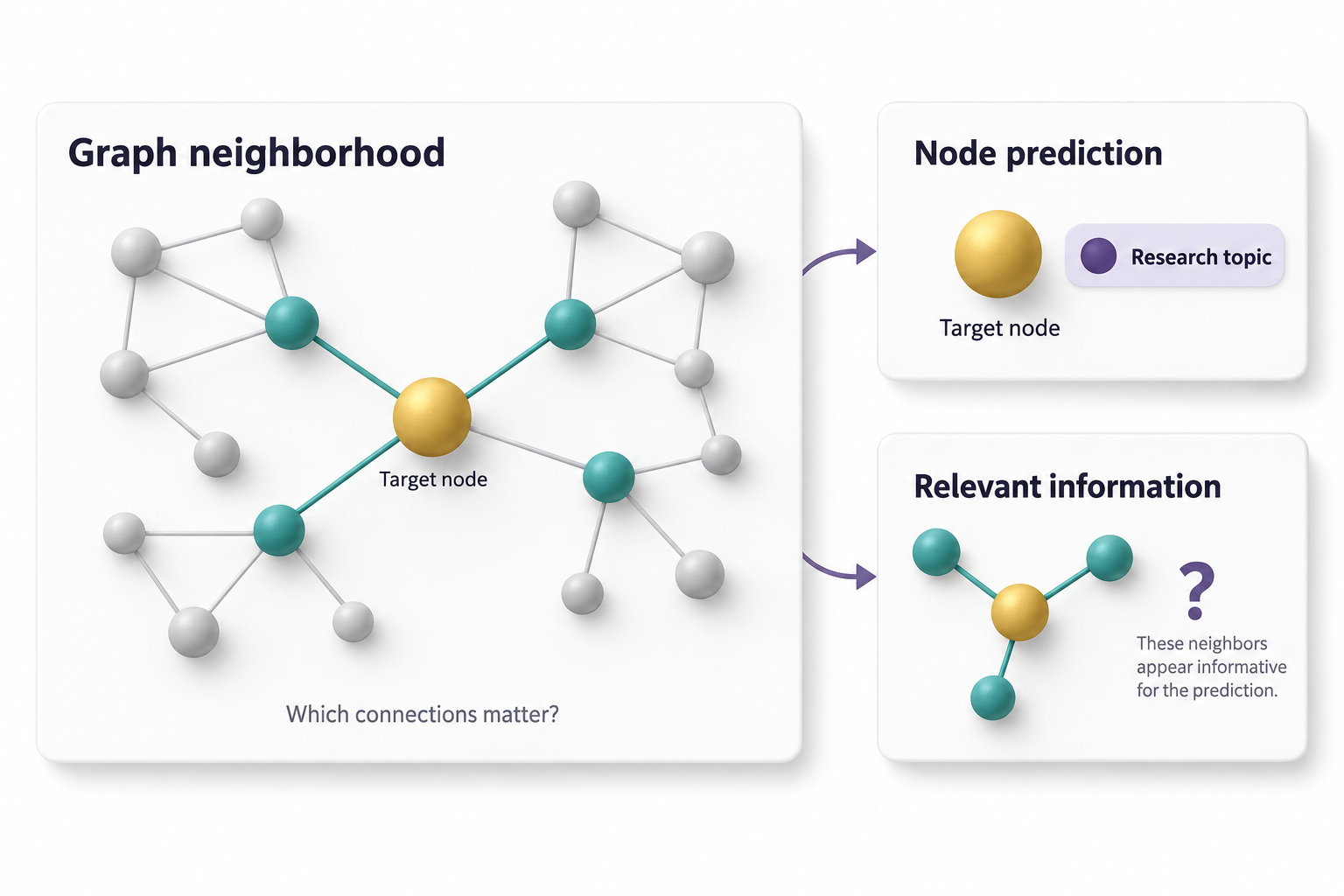
Explainable AI for Graph Neural Networks Emerging
This emerging research explores how predictions from graph neural networks can be understood through the surrounding graph information they use. We investigate the relevance of different neighborhoods and the extent of information propagation needed for a prediction. The goal is to make graph-based learning more interpretable by explaining which relational information matters and why it is useful.